

Post Office Passport Photos
A branch will photograph you, in opening hours, once. At home there is no queue, no limit on attempts, and every rule is checked before you pay. Express delivery to you for free, tracking included.
Delivered by
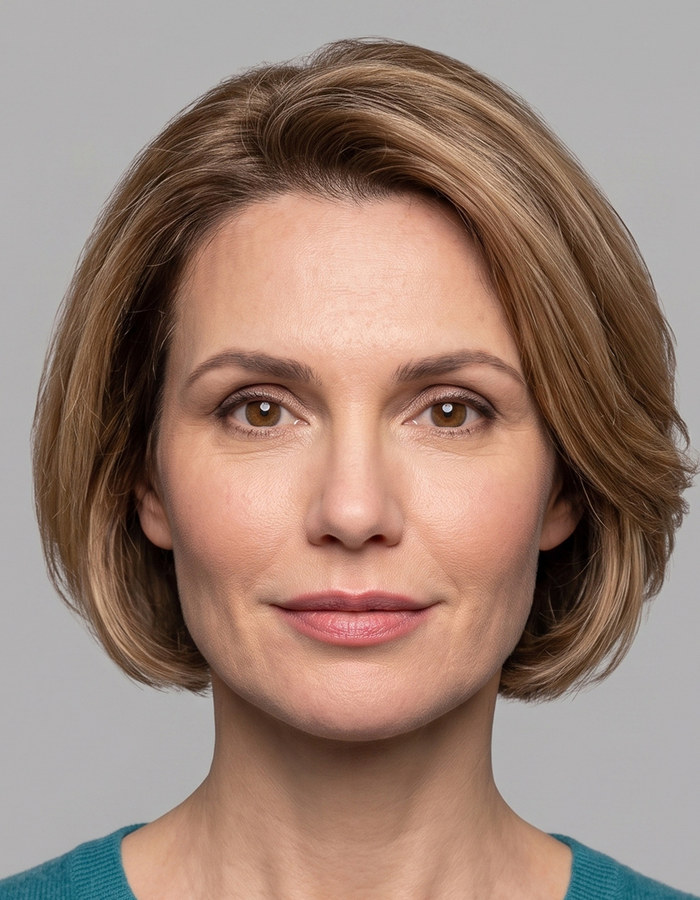
An Australian Passport photo must measure 35–40 mm wide by 45–50 mm high, on a plain white or light grey background. The face, measured from chin to crown, must be 32–36 mm. Your expression must be neutral with your mouth closed, and your eyes open and looking straight at the camera.
Checked against passports.gov.au on 31 July 2026. Read the official guidance.
The Post Office counter, and what it costs to get there
Australia Post branches will photograph you and print the result, which makes them the default for a lot of people. Two things are worth knowing before you go. Most branches will not photograph an infant who cannot sit unsupported — handling a baby for a compliant shot is a risk their staff are not insured to take. And every branch means opening hours, a queue, and one sitting in whatever light the counter has that day.
Taken at home there is no queue and no limit on attempts, and the photograph is measured against the passport office's own rules before you are asked to pay. If you would still rather hold a printed photo at the end of it, we post eight of them.
The rules, exactly as the passport office publishes them
Australia states a range rather than one exact size, which is why two photo shops can hand you different prints and both be correct. The photo must be 35–40 mm wide by 45–50 mm high. Inside that frame your face must measure 32–36 mm, taken from the chin to the crown.
The crown is the top of your head, not the top of your hair. It is a small distinction with a large consequence: measure to the top of a full head of hair, crop to that number, and the face you end up with sits outside the permitted range. Some services describe the measurement that way. The passport office does not.
The background must be plain white or light grey that contrasts with the face; no shadows, reflections or pattern, with no shadow falling across it. The photo must be in colour, sharp, evenly lit, and taken within the last six months. Every figure on this page is read from the passport office's own guidance and carries the date we last checked it — nothing is rounded, reworded, or replaced with a house version.
Photographing a baby or a young child
The specification is the same one, with a single relaxation: a child under 3 may have their mouth open. Everything else — the size, the face height, the plain background, the ban on glasses — applies to an infant exactly as it applies to you. Photographing one is a different job from photographing yourself, though, and it has its own page.
| Photo size | 35–40 mm × 45–50 mm |
|---|---|
| Face height, chin to crown | 32–36 mm |
| Background | Plain white or light grey that contrasts with the face; no shadows, reflections or pattern |
| Expression | Neutral, with your mouth closed |
| Eyes | Open and looking straight at the camera |
| Anyone else in shot | Not permitted |
| Glasses | Not permitted, except for medical reasons |
| Head covering | Religious only, and plain — no patterns at all |
| Hearing aid | Permitted. Wireless earbuds are not |
| Age of photo | Less than 6 months old |
| Paper | Glossy, 200 gsm minimum, dye sublimation (not inkjet) |
| Retouching | Not permitted at all |
Every reason a passport photo gets rejected, checked before you pay
The passport office publishes its own examples of unacceptable photos, and that list is where our checks came from. Smiling. A camera held too close, which distorts the face. Glasses. An object in the frame. Somebody else in the shot. A background that is not plain, or has been edited. Head turned. Head tilted up or down. Hair over the eyes. A patterned head covering. Face partly covered. Looking away. Reduced resolution. Uneven lighting. Blur. Grain. Framing too close, and framing too far. A hat. Wireless earbuds.
All of them run on every photo, alongside the measurements — size, face height to the millimetre, background, exposure, shadow across the face, glare and lens distortion. A minute of somebody's attention at a counter could not cover that list, which is why we do not sell it as a feature, and why some services charge extra for it.
If you order prints, a person then checks the printed photo before it goes in the envelope. Not the file — the paper. That happens on every order and it costs nothing, because a print we were not confident in is not one we would post.
Three things the services selling Australian photos do not do
The rules we check are Australia's, which is not a given. One service selling Australian passport photos publishes a head height larger than 32–36 mm for this exact document and measures it to the top of the hair — the American convention, not the Australian one. Another cites United States State Department requirements on the same site it sells Australian photos from. Follow either and your photo has been measured against the wrong country's rule.
Eight prints, delivered free, and cheaper per photo than any service we compared. They are included rather than added at checkout — the two nearest services charge extra on top of their headline price for the same eight.
And a tracking number, on every order. None of the services we compared advertises tracking; they post regular mail. Every price and every claim sits side by side, with the date each was read, so none of this has to be taken on trust.
Digital
High-resolution file, correctly cropped, ready to upload or print.
8 printed photos, delivered
Not available yet in Australia. The digital photo is ready to download the moment it passes; printing and postage are coming.
How to take it at home
Stand away from a plain wall
Face a plain white or light-grey wall with nothing on it — no picture frame, no door edge, no patterned curtain. Stand a good pace forward of it so your own shadow falls on the floor behind you rather than on the wall, which is the most common reason a home photo fails on background.
Let the light come from in front
Face a window and let the daylight fall on you rather than behind you. No flash: it flattens the face, throws a hard edge of shadow onto the wall and causes red-eye. An overcast day through a large window is the best light you will get for nothing.
Use the timer, and stand back
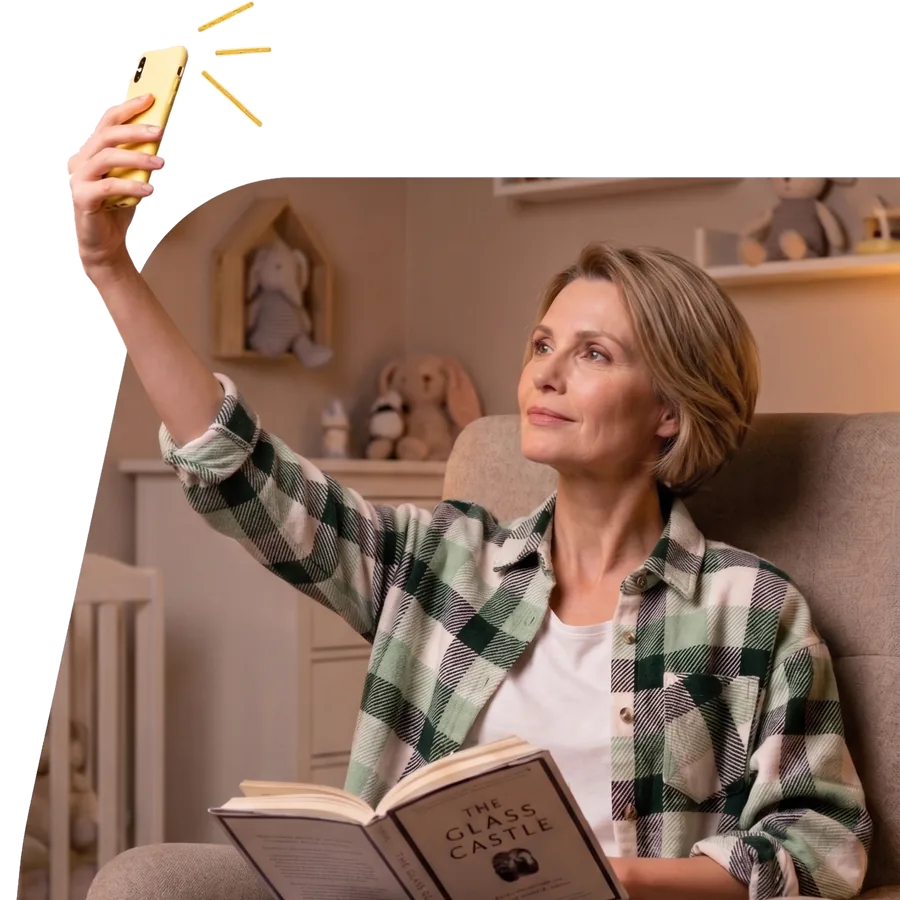
Prop the phone at eye height and use the self-timer rather than holding it at arm's length. A phone held close enlarges the nose and narrows the ears, and a camera too close is on the passport office's own list of unacceptable photos. Stand back, and let the crop do the rest.
Frequently asked questions
Does Australia Post take passport photos?
Australia Post branches photograph you and print the result, which is why they are most people's default. Going means opening hours, waiting your turn, and whatever lighting the counter has that day. Most branches will not photograph an infant who cannot sit unsupported.
Why won't the Post Office photograph my baby?
Most branches decline infants who cannot sit up on their own. Getting a compliant shot means positioning a baby's head, and that is a handling risk their staff are not insured to take, so parents are usually turned away at the counter. At home there is no queue and no limit on attempts.
Can I use my own photo for an Australian passport?
Yes. Nothing requires a Post Office or any other counter — the requirement is that the photograph meets the published specification. Measuring it against that specification, before you are asked to pay anything, is exactly what this page does.
Can my Australian passport photo be rejected?
Any photo can be rejected. What separates services is what that costs you. A refund — even a double refund — hands back your money and leaves you without a passport and at the end of the queue, weeks later. We measure every rule before asking for payment, so a photo that cannot pass never reaches the checkout at all. In the rare case the office still disagrees, you are refunded in full, without argument.
Can you smile in an Australian passport photo?
No. The required expression is neutral, and the passport office lists smiling among its own examples of unacceptable photos. A relaxed face is fine; anything that raises the cheeks, narrows the eyes or shows teeth is not. Australia makes one exception, and it is not for adults: a child under 3 may have their mouth open.
How big does my head have to be in an Australian passport photo?
32–36 mm, measured from the chin to the crown. The crown is the top of the skull rather than the top of the hair, so a tall or voluminous hairstyle does not raise the figure — measuring to the hair produces a crop that falls outside the permitted range.
What size is an Australian passport photo?
An Australian passport photo is 35–40 mm wide by 45–50 mm high. Australia publishes a range rather than a single dimension, so a print anywhere inside it is acceptable — which is why two shops can give you visibly different photos and both be right.
Can I wear glasses in an Australian passport photo?
No. Glasses are not permitted, and the passport office is explicit that poor vision on its own is not a reason to keep them on. The one exception is medical, where they cannot be removed; the frames must then not obscure the eyes and the lenses must not reflect.
Can I wear a hijab in an Australian passport photo?
Yes. If you usually cover your head for religious reasons you may wear the covering in your photo. Two conditions apply: it must be plain, with no pattern at all — not even a small one — and your whole face must be visible from the bottom of the chin to the top of the forehead, with the edges of your face showing on both sides.
Can I have a beard in an Australian passport photo?
Yes. Facial hair is your ordinary appearance and there is no rule against it. What the rules do reach is anything obscuring the face or the eyes — so hair falling across the eyes, or a fringe long enough to cover them, is a reason for rejection where a beard is not.
Should an Australian passport photo be glossy or matte?
Glossy. The passport office asks for heavy-weight glossy paper of at least 200 gsm, printed by dye sublimation rather than an inkjet. It is why a photo run off at home on an office printer can be refused even when the image itself is perfect.
Where can I get Australian passport photos printed?
Officeworks, Kmart, Big W and Australia Post will all print photos you bring in, and their machines are the right kind. Printing at home usually is not — an inkjet does not meet the standard. Or skip the errand: we print yours and post them, eight photos with free express delivery and tracking, anywhere in Australia.
Can I take my own Australian passport photo at home?
Yes. No rule requires a professional photographer or a shop — only that the finished photo meets the specification. A phone camera has been more than sharp enough for years; what a counter provides is framing and a plain wall, and both are reproducible in a hallway.
Can I retouch or edit an Australian passport photo?
No. Retouching is explicitly not permitted — the passport office names removing moles, wrinkles or scars, and lists skin smoothing among its examples of unacceptable photos. Editing the background is on that list too. We correct exposure and crop to the required dimensions; we never alter a background, a face, or clothing.
How old can an Australian passport photo be?
Less than six months. The point is that the photo shows how you look now, so a good photograph from last year is not usable however well it meets every other rule.
How long does an Australian passport last?
Ten years for an adult. Passports issued to children under 16, and to applicants aged 75 or over, run for five years instead.
Can I wear a hearing aid in an Australian passport photo?
Yes. Hearing aids may be worn, and the passport office says so for adults and children alike. Wireless earbuds are not hearing aids and have to come out before the photo is taken.